
Food Allergy
You’ve Been Diagnosed With a Food Allergy. Now What?!?
By Kaley Jacobson4 minutes

So you or your child has recently been diagnosed with a food allergy. Feeling overwhelmed? Learning you or a family member will need to eliminate or decrease your favorite foods – or continue to wreak havoc on your body – is life changing for everyone involved. Where do you start and how can you make this adjustment as easy on you and your family as possible? Don’t despair! By following some simple steps and taking it one day at a time, you can survive this major life adjustment and reap the benefits of feeling better in the process.
Soothe the stress
The transition can be emotional, so it’s important to find a way to relax and address your stress. Take the time to really breathe. By performing deep breathing exercises daily, you can not only ease anxiety, you can feel more empowered and realize you are in control of the situation. There are many deep breathing exercises, so find one that suits you. Below is just one example found at The Harvard Medical School Family Health Guide:
Find a comfortable place to sit with your feet flat on the ground. Close your eyes and focus on your breath. Inhale deeply through your nose, filling your lungs with air. Place your hand on your lower stomach and feel your belly fill as you breathe in. Hold your breath for a few seconds and exhale slowly through your mouth. Let your body relax and release tension. Focus on what you have to be grateful for. Repeat this exercise multiple times daily to help relieve stress.
Take control of what you can control
If you are at risk for severe reactions such as anaphylaxis, always carry your epinephrine auto-injector and any necessary medications. Consider wearing emergency identification jewelry to notify medical professionals if you’re unable to respond in an emergency. Also have an emergency plan in place. Visit the FARE website for a sample that can be filled out with your allergist.
Seek the help of a dietitian
A dietitian can help you sort through the food allergy world by offering advice on food substitutions and lifestyle tips to ensure you or your child are receiving a completely balanced diet while eliminating your food allergens.
Do your research
Become knowledgeable about your allergy by researching which foods contain ingredients with your food allergens and avoid them, and use the wealth of online resources available.
Become a label reader…EVERY TIME you shop
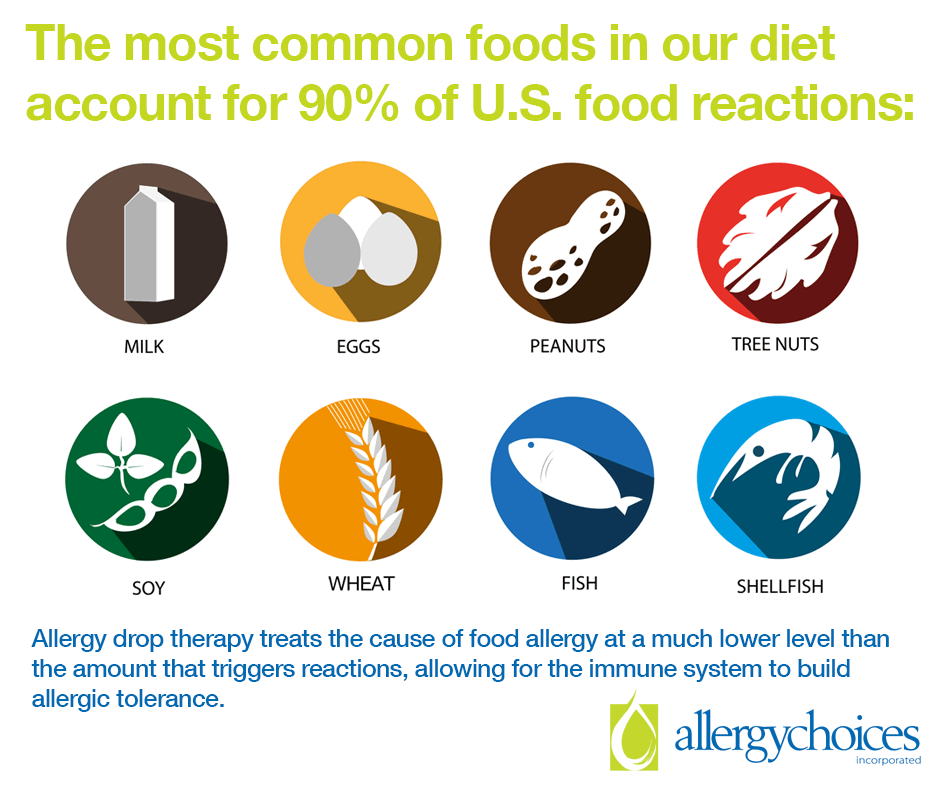
Food manufacturers can change ingredient lists at any time, so just because a food was safe before doesn’t mean it’s safe now. Fortunately, the Food Allergen Labeling and Consumer Protection Act of 2004 require all processed foods to note the top eight allergens on labels. These include dairy, wheat, soy, egg, peanuts, tree nuts, fish, and shellfish. The ingredient label will clearly state if the food contains any of these ingredients.
Find social support
It could be friends or family members or a food allergy support group in your community. You are not alone. An estimated 26 million adults and 6 million children live with a food allergy. No food allergy support group in your area? Consider starting one. Adults can benefit from knowing other families dealing with similar issues and children can meet peers who can relate to their experiences.
Focus on the foods you can eat
Though it’s disheartening to have to avoid many common foods, a much wider variety of food options are now available at your fingertips. Grocery store shelves are lined with allergy-free food options. It’s a great time to try new foods and have fun doing it.
A food allergy diagnosis isn’t the end of the world. Combined with food allergy treatment, lifestyle modifications can make an impact at helping you continue to live life to its fullest. Next time, we’ll talk about how to tackle dining out – one of the many challenges of managing food allergy.
Author: Emily Melby, RDN