For Providers
For Providers
Do you want more patients to have a safe, effective and proven way of changing their underlying allergic diseases?
Do you want more patients to have a safe, effective and proven way of changing their underlying allergic diseases?
Today you have another first-line treatment option. Allergychoices can help your practice integrate custom, patient-specific sublingual immunotherapy using the La Crosse Method™ Protocol. In use since 1970, the Protocol is uniquely optimized to your patients’ needs, with treatment targeting their specific allergen reactions and level of sensitivity.
Because of the Protocol’s safety and convenience profile, it expands the number of patients who can benefit from immunotherapy beyond traditional injection immunotherapy and other treatment options.
Continuity of care
Are you facing allergy shot delivery interruptions in your practice?
We’re hearing that a number of practices are unable to continue allergy injection therapy in their offices due to staffing challenges.
You can continue your patients’ allergy treatment by converting to sublingual immunotherapy and we’re here to help. Our pharmacy team can provide support to convert patient treatment to allergy drops, which can be safely delivered directly to your patients’ homes.
Our goal is to support your efforts in helping provide continuity of care for your patients and your practice, especially at a time and season when respiratory health is critical.
To speak with a pharmacist about conversion, please call us at 608.791.5301.
What we do for your practice
Our Services
Pharmacy
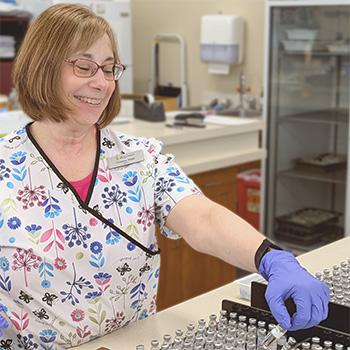
Each custom, named-patient prescription is prepared by our licensed and credentialed pharmacists and technicians according to physician prescription.
Learn more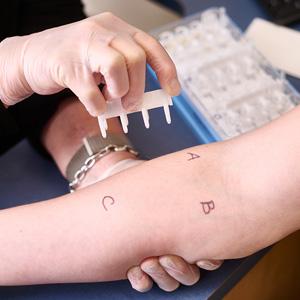
Allergy Testing
The right allergy testing diagnostics help you target allergy treatment specific to your patients’ needs with a clear and accurate diagnoses.
Learn more
Clinical Practice Support
Allergychoices provides expertise in sublingual immunotherapy, and can support you through initial dosing, escalation & ongoing patient management issues.
Learn more
Practice Growth & Marketing Services
Benefit from the investment in time, money, research & expertise by industry leaders who have created materials to support your patient & practice goals.
Learn more
The standard
Why do more providers look to Allergychoices as the standard for delivering sublingual immunotherapy?
Education and Support.
We’ve provided La Crosse Method Protocol training to more than 2,000 medical providers across the U.S., and treatment support for tens of thousands of patients.Comprehensive solutions.
The Protocol supports the full range of allergy patients, from general to complex, with flexible, patient-specific treatment options for environmental, food, and preseasonal (rush) immunotherapyAdvocacy.
We are committed to helping providers help more patients with personalized, safe, and evidence-based allergy diagnostics and treatment.Access.
By expanding the number of providers using the Protocol, more patients have the option to change their allergic diseases safely, effectively, and affordably, close to home.Accountability.
We are guided by the latest research and data to improve care and outcomes.
Validation
La Crosse Method Protocol outcomes were reviewed by the Validation Institute, an independent team of population health scientists and bio-statisticians, which validated them in 2018 and 2020; that validation expired in July 2022. For more information, visit validationinstitute.com.
In this section
More for providers
About the La Crosse Method™ Practice Protocol
The La Crosse Method™ Practice Protocol is about providing allergy patients customized treatment. It is the most widely-used SLIT protocol in the U.S.
Learn moreGet Started to Becoming a Provider
Allergychoices can help your practice integrate custom, patient-specific sublingual immunotherapy blending European and U.S. traditions and research.
Learn moreOur Service Approach
Allergychoices staff has unique expertise to help you build a successful sublingual immunotherapy practice from the ground up.
Learn moreProvider Inquiry | Request a Call or Email
If you're a healthcare provider interested in offering custom sublingual immunotherapy to your patients, please fill out this contact form.
Learn moreSublingual Immunotherapy Training
Learn from the experts with sublingual immunotherapy training from Allergychoices about integrating treatment into your practice.
Learn moreWatch Provider Reviews of Allergychoices
Want to know what it is like to work with Allergychoices? Hear from your colleagues in these videos about offering sublingual immunotherapy.
Learn moreWho May Benefit from Sublingual Immunotherapy (SLIT)?
La Crosse Method sublingual immunotherapy (SLIT) is designed for safety & comfort. It’s possible to treat those who were considered too allergic.
Learn more
Practice planning guides
- Drops (SLIT) programs for physicians compared
Compare Allergychoices, AllergyEasy, Wyndly, Curex and Serologix by physician program model, clinical support, prescription workflow and the practice terms that still need a written quote.
- Add sublingual immunotherapy to your practice
A clinician-led implementation guide for environmental allergy immunotherapy: training, patient selection, accountable prescribing, dispensing, supervision, consent, follow-up, and cost discussions.
Regulatory status of allergy drops
A small number of sublingual immunotherapy (SLIT) tablets are FDA-approved for specific allergens. Personalized allergy drops are compounded by a pharmacy for each patient and prescribed off-label — a long-standing, legitimate practice with decades of use, and SLIT is a first-line prescription approach in much of Europe. Compounded allergy drops are not FDA-approved, but they are created using FDA-approved allergenic extracts, the same as in allergy shots. Off-label does not mean unsafe or experimental.
U.S. allergenic extracts are licensed and labeled for injection and skin testing, not for the sublingual route, so prescribing them as sublingual drops is an off-label clinical decision made by the treating provider.
Next step
Offer allergy drops in your practice
Request a call and see how the La Crosse Method™ Protocol fits your workflow.