
4 Allergy Terms Explained
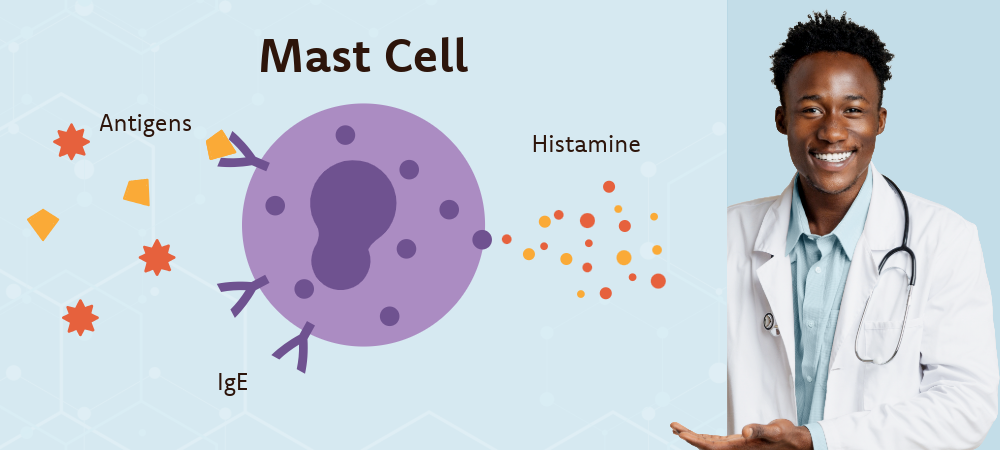
Allergy care can feel like a lot at first — new terms, new treatments, and new information all at once. Below is a simple explanation of four common terms you’ll likely hear at your first allergy appointment. If anything isn’t clear, your provider is always the best resource for questions.
Histamine
 You’re sure to have heard of antihistamines – you’ve probably used them for years as a crutch to get through allergy season. But what is histamine, and why does taking antihistamines help with symptoms?
In simple terms, histamine is a chemical that the immune system, specifically mast cells, releases when it senses it’s “under attack”. When you breathe in pollen or another substance that you’re allergic to, the immune system may sense it as harmful and release histamine into the bloodstream.
- Expansion of blood vessels
- Increased heart rate
- Headache
- Mucus production
And other reactions that lead to common allergy symptoms. Antihistamines work to limit the release of histamine, and that’s why symptoms are often reduced with its use.
IgE
 Similar to histamine, the body responds by creating an antibody called IgE (immunoglobulin) when exposed to a problem allergen. In a blog about allergy testing, we explained that IgE travels and attaches to mast cells in your body, usually in the lungs, skin, or respiratory tract, and that can be a domino falling in the allergic reaction chain.
You may hear about IgE when getting a blood test to determine your allergies because blood samples are exposed to an extract of a potentially offending allergen, for example, dust mite. If the blood contains IgE to dust mite, the two substances will bind together and stay attached. An enzyme is then added, which may cause the reaction to change color. If the sample changes color, the lab can determine the amount of IgE present to determine how allergic a person is.
Antigen
 An antigen is a substance that triggers an immune reaction in your body. Antigens are typically substances like pollen, foods, dust mites – but can also be things like bacteria, viruses, or toxins.
An antigen is “classified” as an allergen if it causes an allergic reaction. You may hear providers switch between antigen and allergen when talking about allergies because the terminology is so similar.
Immunotherapy
Immunotherapy is the only treatment for allergies, and it retrains the immune system to not react when exposed to allergens. There are three common forms – allergy drops, shots or IV, and tablets. With each form, the body is slowly introduced to increasing doses of allergens, so that the body learns to not respond with histamine, IgE and all the symptoms that come along with it.
Allergychoices recommends allergy drop immunotherapy because it’s custom to each patient, safe, and effective (even after treatment is complete!). Learn more about how allergy drops could benefit you, and find a provider near you that offers testing and treatment.