
Pediatric Allergy
Tips to Help Make Going Back to School a Success
By Kaley JacobsonUpdated 3 minutes

The start of another school year is filled with joy and excitement. And when planning the school year for an allergic child, it can be a bit nerve wracking too. Make this school year a bit less stressful with planning and education for the allergic child and school staff.
The goal for parents and educators is to limit missed or unproductive school days and to get the most out of the learning environment for allergic children. Parents and educators can work together to make sure allergic children stay healthy.
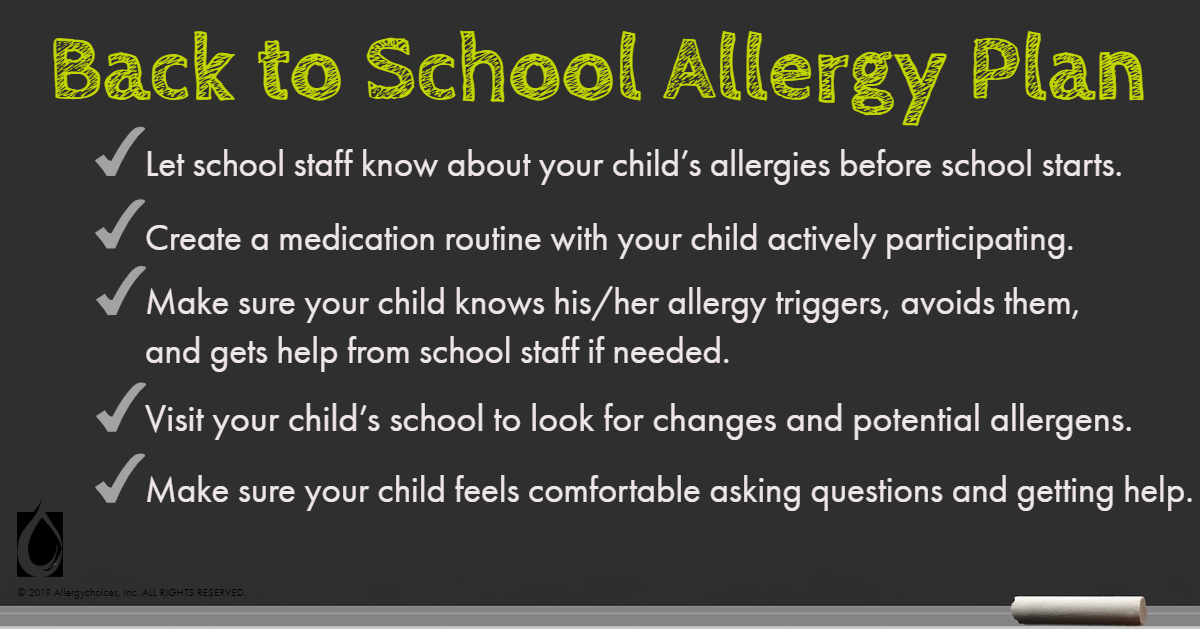
Here are some important tips for going back to school:
- Remind children to take maintenance medication as prescribed because it can help ward off symptoms of allergies and asthma.
- Make sure your child knows what triggers their allergies, to avoid those triggers, and to identify early warning signs in case of exposure.
- Teach your child to ask school personnel for help if symptoms occur.
- Schools remodeled over the summer could have additional allergens. New carpeting and paint, as well as classroom pets and mold, can aggravate allergies and asthma. Visit your child’s classroom early to identify triggers.
- Parents should communicate with educators early in the school year about their child’s allergies and about removing allergens from the room, like classroom pets or certain foods.
- Make sure your child feels comfortable asking questions about foods they aren’t sure about. Let them know it is okay to ask cafeteria staff about the food.
- Cafeteria staff should be well trained on handling children’s food questions.
- Implement a “No Trade” rule. Children with food allergies should not trade their food with other children for any reason. Even if the school does not have this policy, you can implement it at home.
- Have an emergency plan in place if accidental exposure occurs. Make sure teachers, healthcare staff, coaches, and your child understand triggers and symptoms, and how to handle them if they occur.
While these tips can help keep allergic children safer at school, treatment using sublingual immunotherapy (or allergy drops) could help change the child’s underlying allergic disease so these triggers no longer affect them.
Sublingual immunotherapy has proven especially helpful for children with eczema, asthma, and recurrent ear infections, which often have underlying allergic causes. “We know that treating children for specific allergies including dust mite, egg and wheat, and conditions such as eczema and allergic rhinitis, can lower the incidence of their developing asthma and other chronic conditions later in life,” says Mary S. Morris, MD, ABIM, of Allergy Associates of La Crosse. “Treating allergies with allergy drops early can have long-term benefits, not only by controlling chronic illnesses, but by simply keeping kids in school and enjoying the experience.”
By Beth Davidson, Allergychoices