
For Providers
Allergy Testing Advantages & Limitations
So what are the advantages and limitations of allergy skin testing and blood testing through our ImmunoCAP Reference Laboratory?
Method comparison
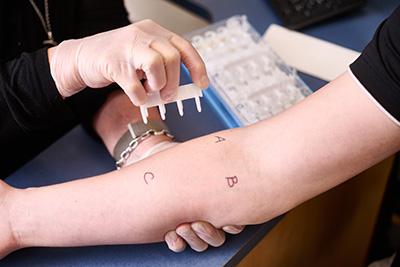
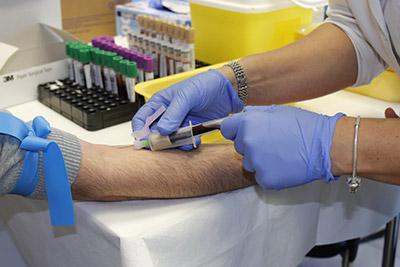
Skin testing vs. in vitro testing
ADVANTAGES
- Immediate results
- Enables you to track delayed reactions
- Typically more sensitive than in-vitro tests
- Potential revenue stream to practice
LIMITATIONS
- More difficult for needle averse
- Not for all patient populations – infants, needle averse, severe anaphylaxis risk, skin disease
- Requires suspension of some medications before testing
- Not recommended for food testing diagnosis
- Staff and materials required
ADVANTAGES
- Low risk for highly sensitive patients
- Requires little staff time or overhead
- Allows additional tests at a later date with serum sample
- Medication suspension not required before testing
- Ideal for testing food allergy
- Quantifiable measure
- Revenue stream in some states where allowed
LIMITATIONS
- Results available within 3-5 days
- Less sensitive than skin testing
- Can be more costly than skin testing
Keep reading
More on allergy testing diagnostics
Allergy Testing Diagnostics
The right allergy testing diagnostics help you target allergy treatment specific to your patients’ needs with a clear and accurate diagnoses.
Learn moreAllergy Skin Testing Training
Allergy skin testing training empowers you to use a quick, easy-to-administer, industry-leading tool with specific, reproducible results.
Learn more
Regulatory status of allergy drops
A small number of sublingual immunotherapy (SLIT) tablets are FDA-approved for specific allergens. Personalized allergy drops are compounded by a pharmacy for each patient and prescribed off-label — a long-standing, legitimate practice with decades of use, and SLIT is a first-line prescription approach in much of Europe. Compounded allergy drops are not FDA-approved, but they are created using FDA-approved allergenic extracts, the same as in allergy shots. Off-label does not mean unsafe or experimental.
U.S. allergenic extracts are licensed and labeled for injection and skin testing, not for the sublingual route, so prescribing them as sublingual drops is an off-label clinical decision made by the treating provider.
Next step
Offer allergy drops in your practice
Request a call and see how the La Crosse Method™ Protocol fits your workflow.